CREATE
Space Between Retreat is a living creative practice. What grows here — in the studio, the forest, the workshop — is as much a part of the retreat as the land itself. This is a window into the work being made.
Art Explorations
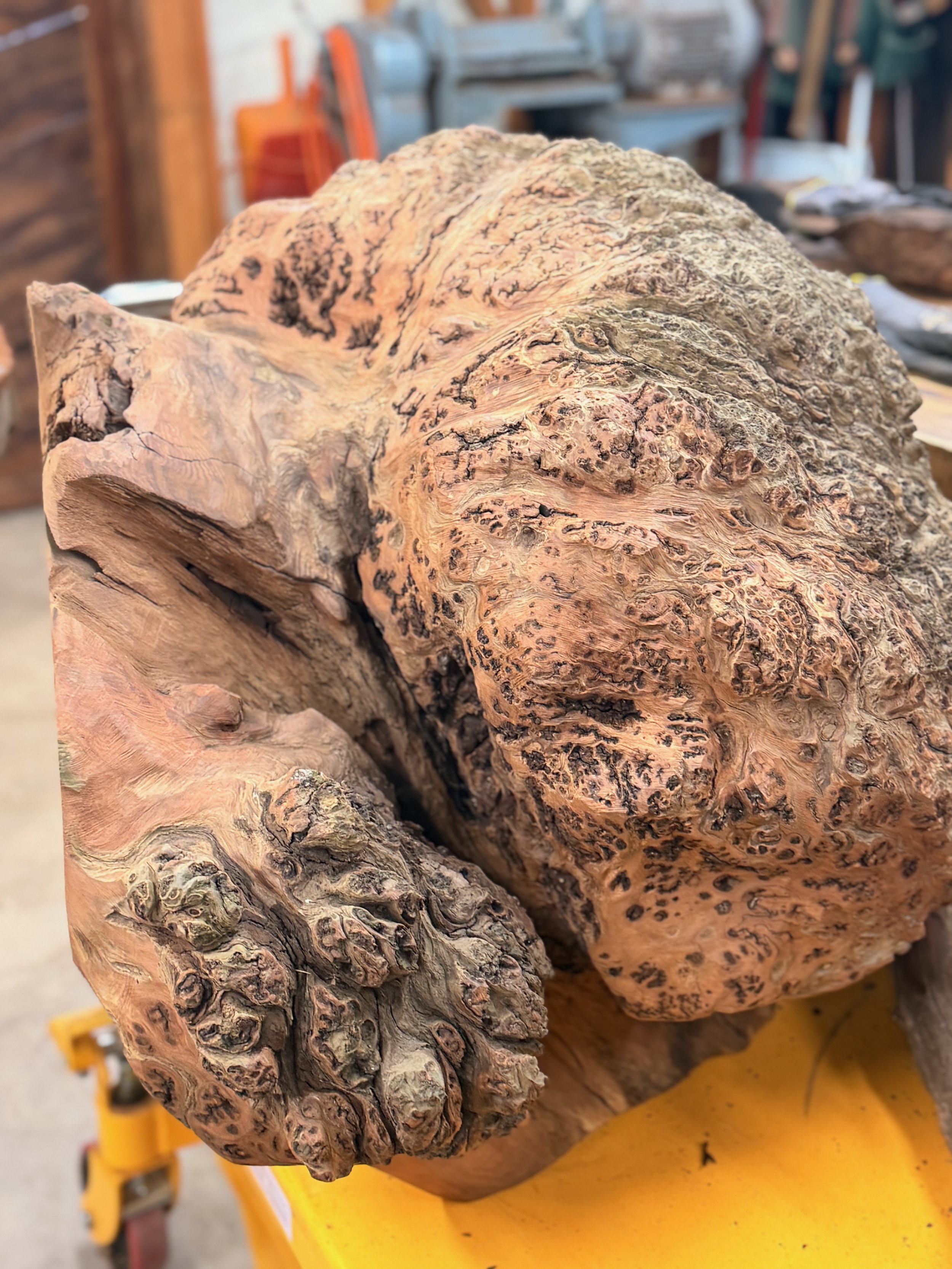
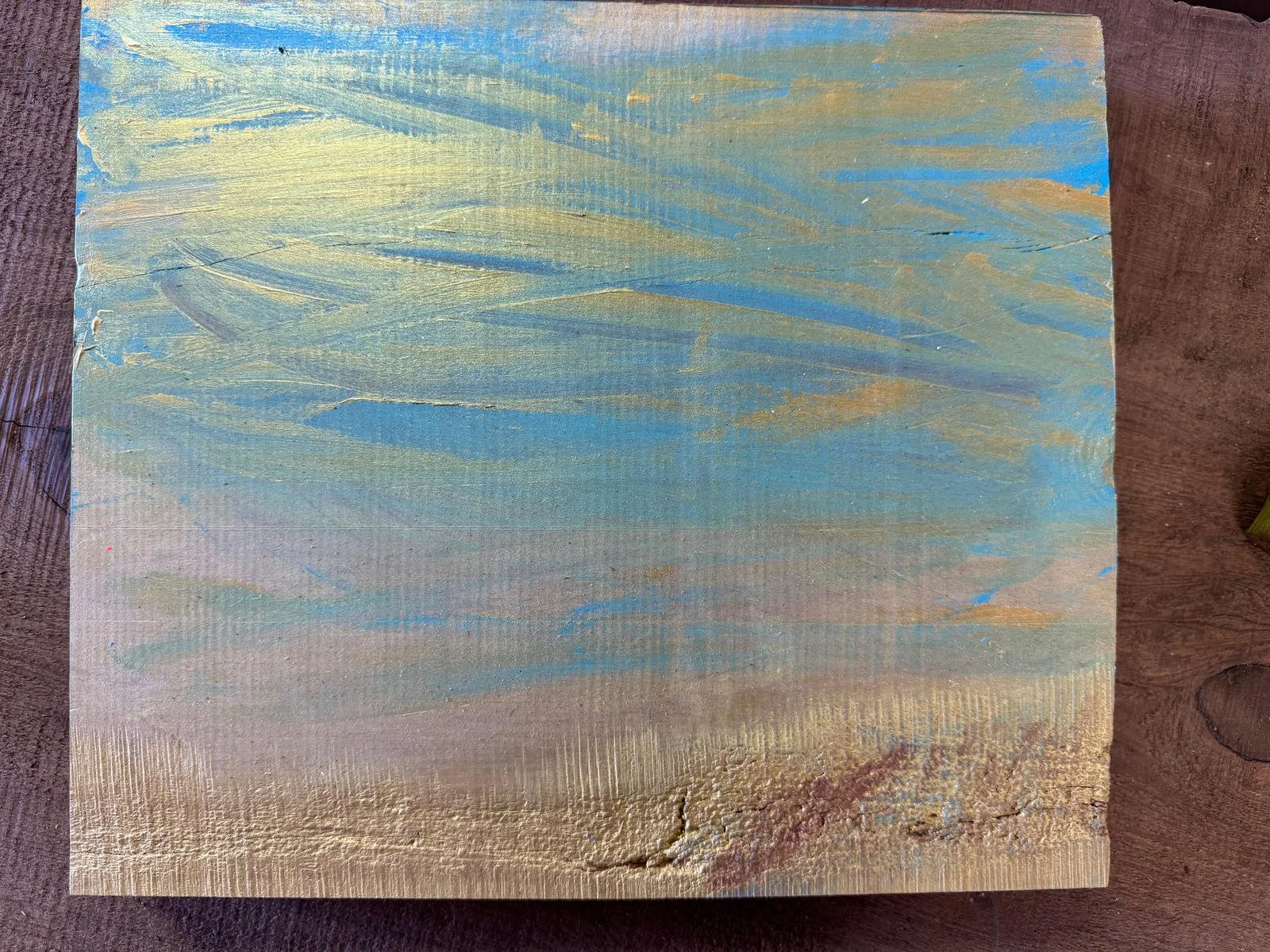
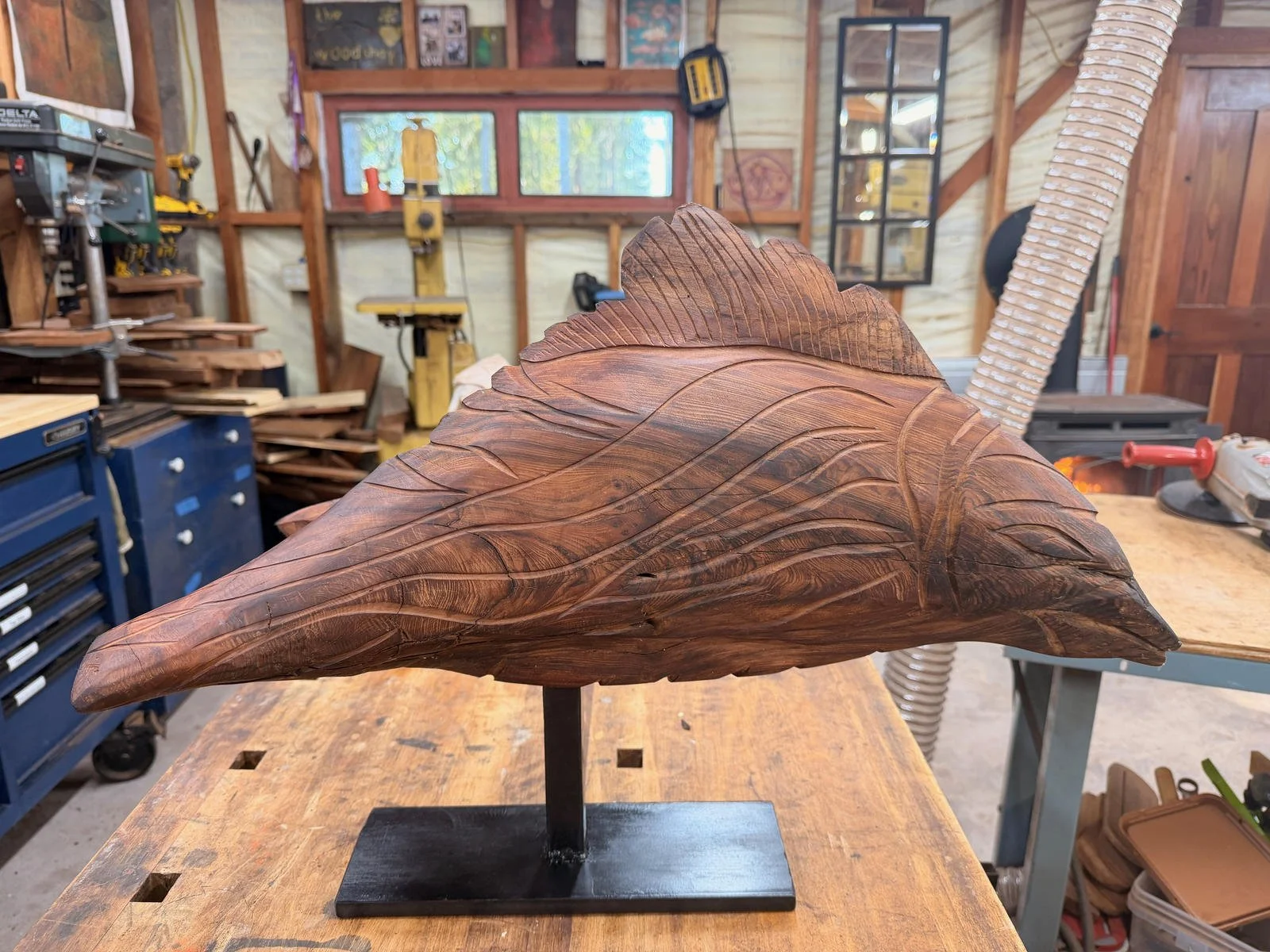
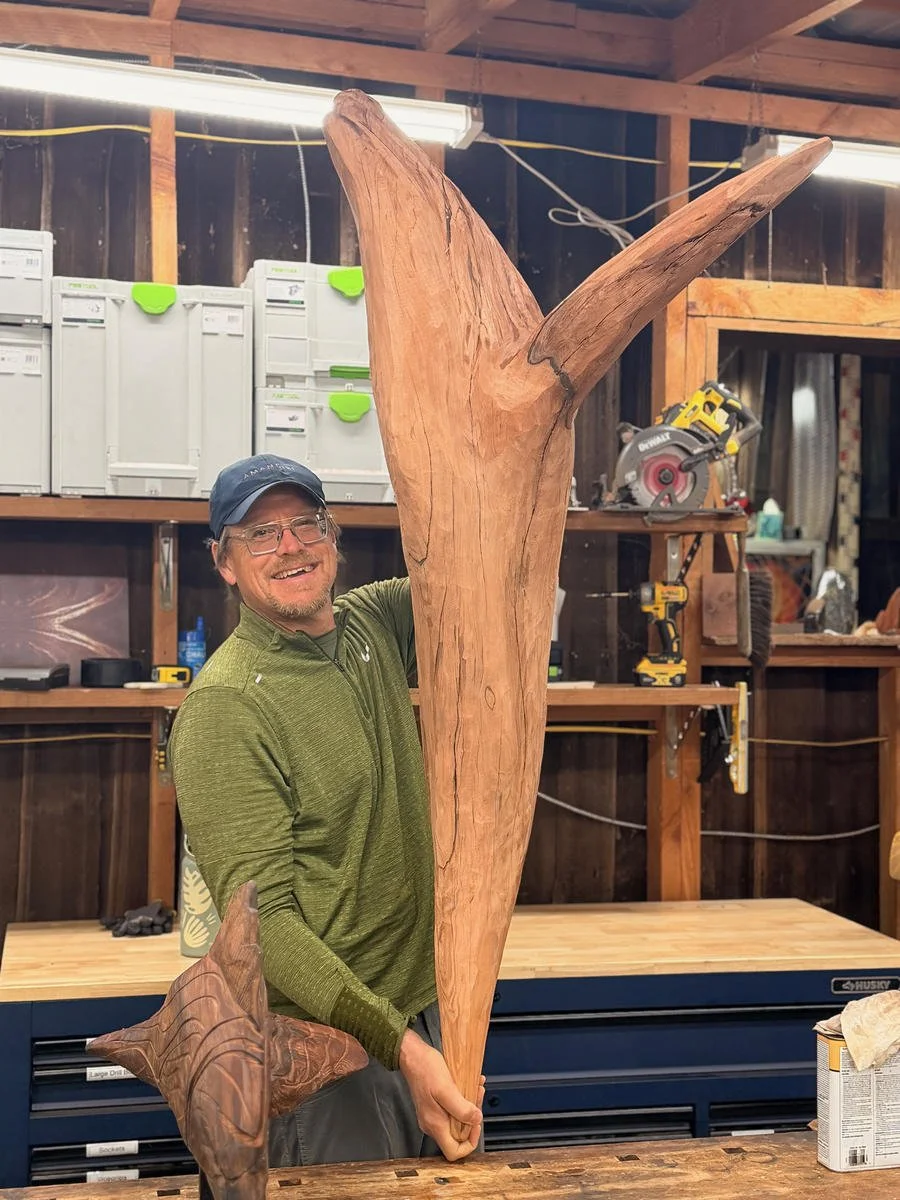
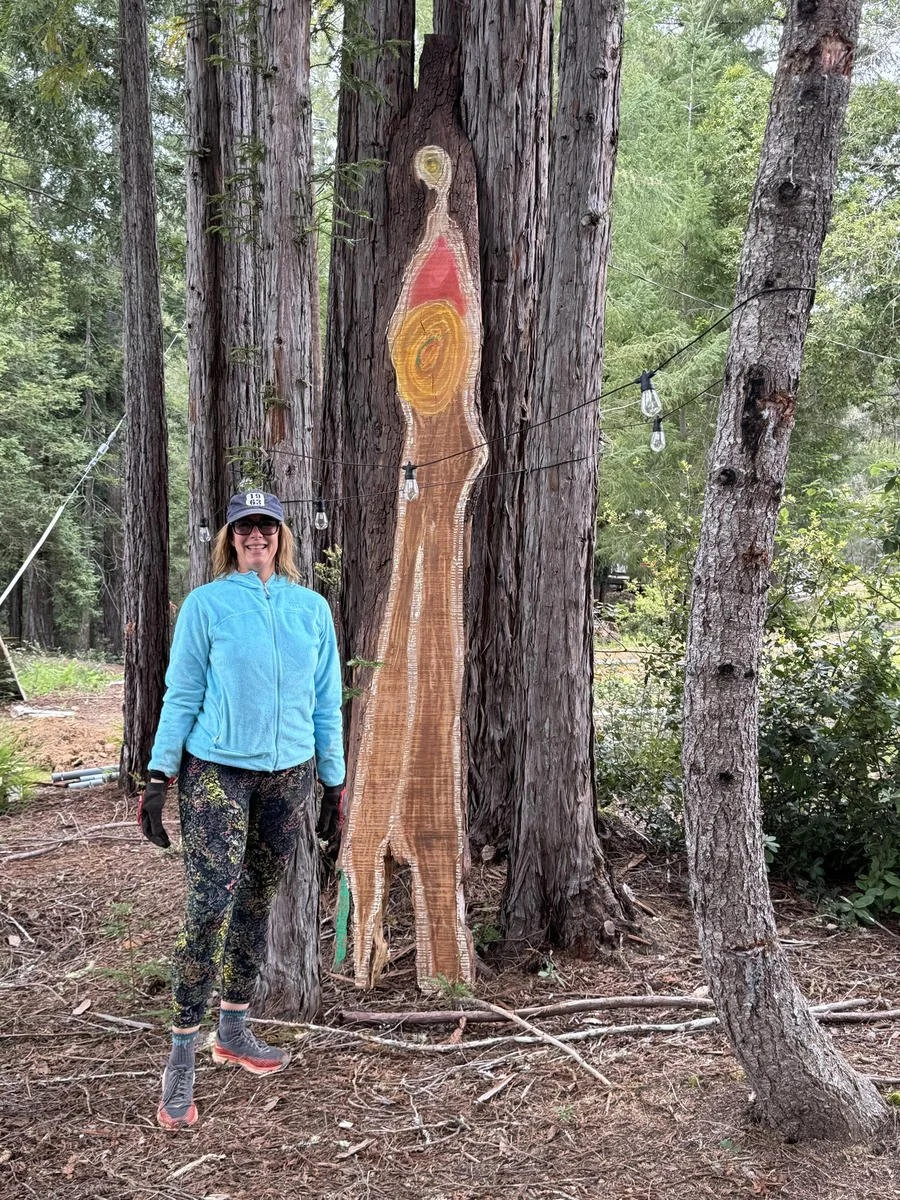
Featured Above:
Samantha with her Pregnant Medicine Woman
Samantha’s Painting Sahara
Chris’s Work in Process: “The Brain”
“Flying Fish”, a joint undertaking by Chris with Artists in Residence Tanu & Koa
“The Whale”, a joint undertaking by Chris with Artists in Residence Tanu & Koa
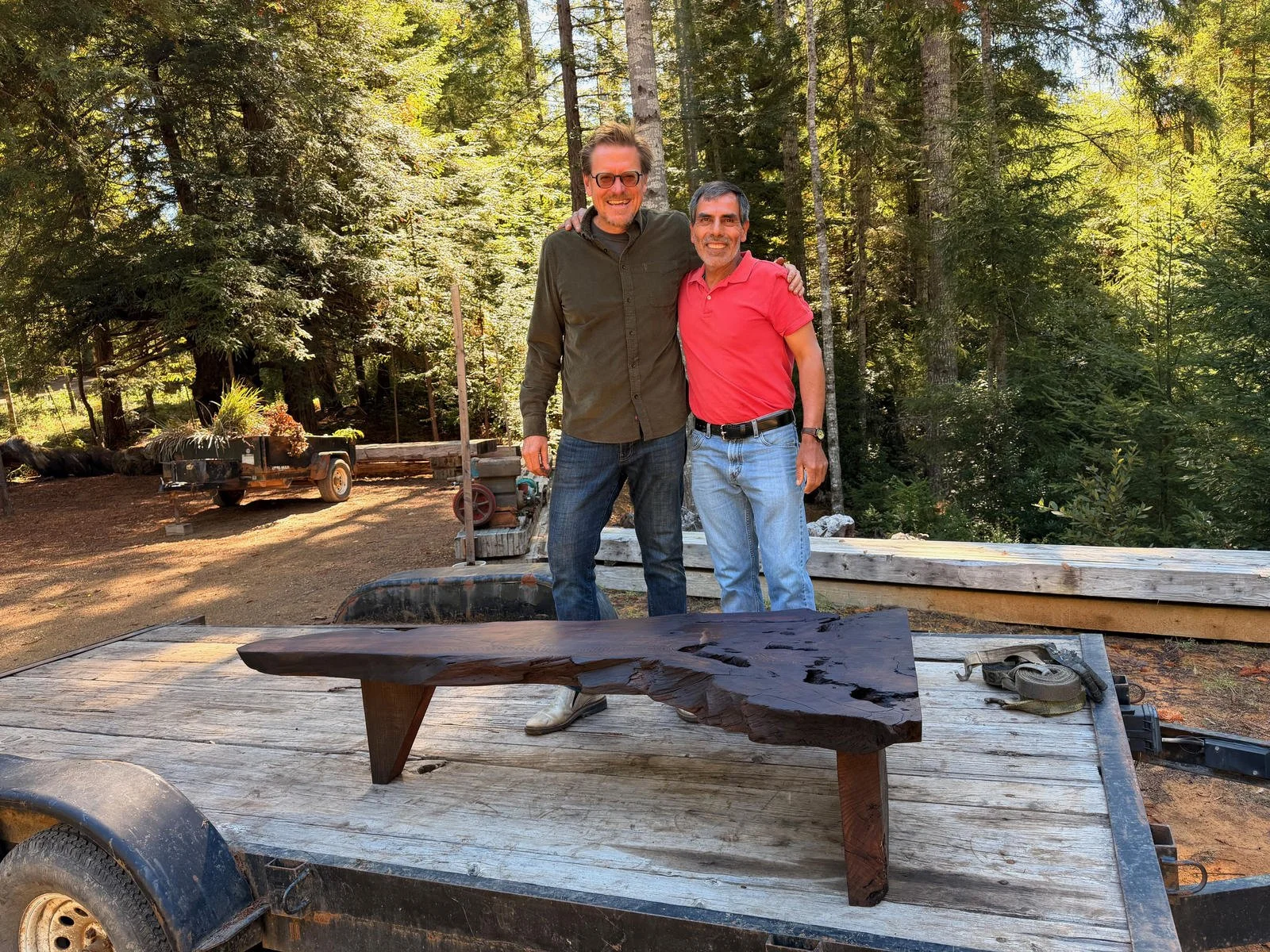
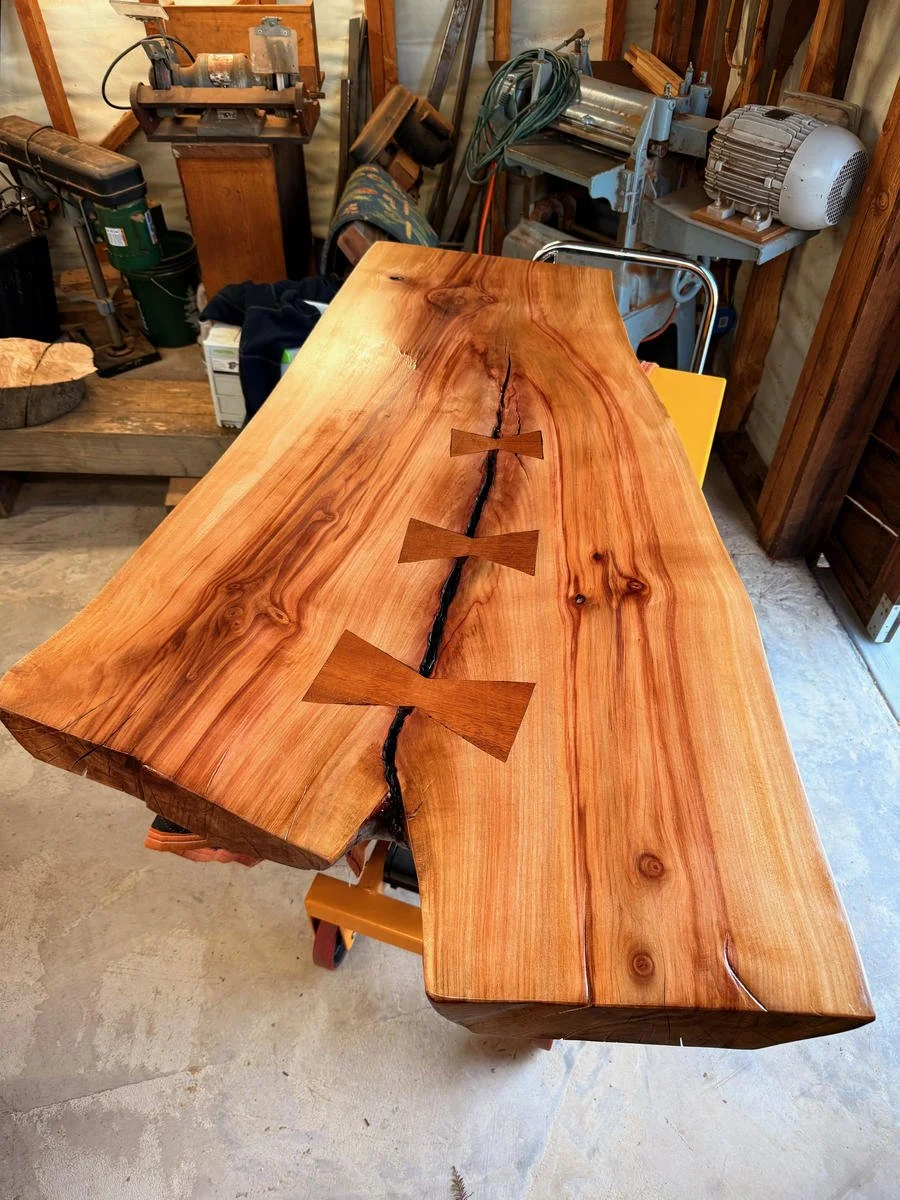
Christopher’s Furniture: Wildwood Spirits Woodworking
Annual April Artists in Residence
Part of the Heart Goal of Space Between Retreat is to provide space for creatives to expand and explore their art, whether it be in the form of music, writing, painting, sculpture or otherwise.
Each April we open Space Between Retreat for one or more selected artists to be in residence on the property. We offer them housing, a few weekly community meals, insights into their practice, meditation sessions and hiking, and, most importantly, space to develop their creations. In exchange they create and leave an art offering at Space Between Retreat.
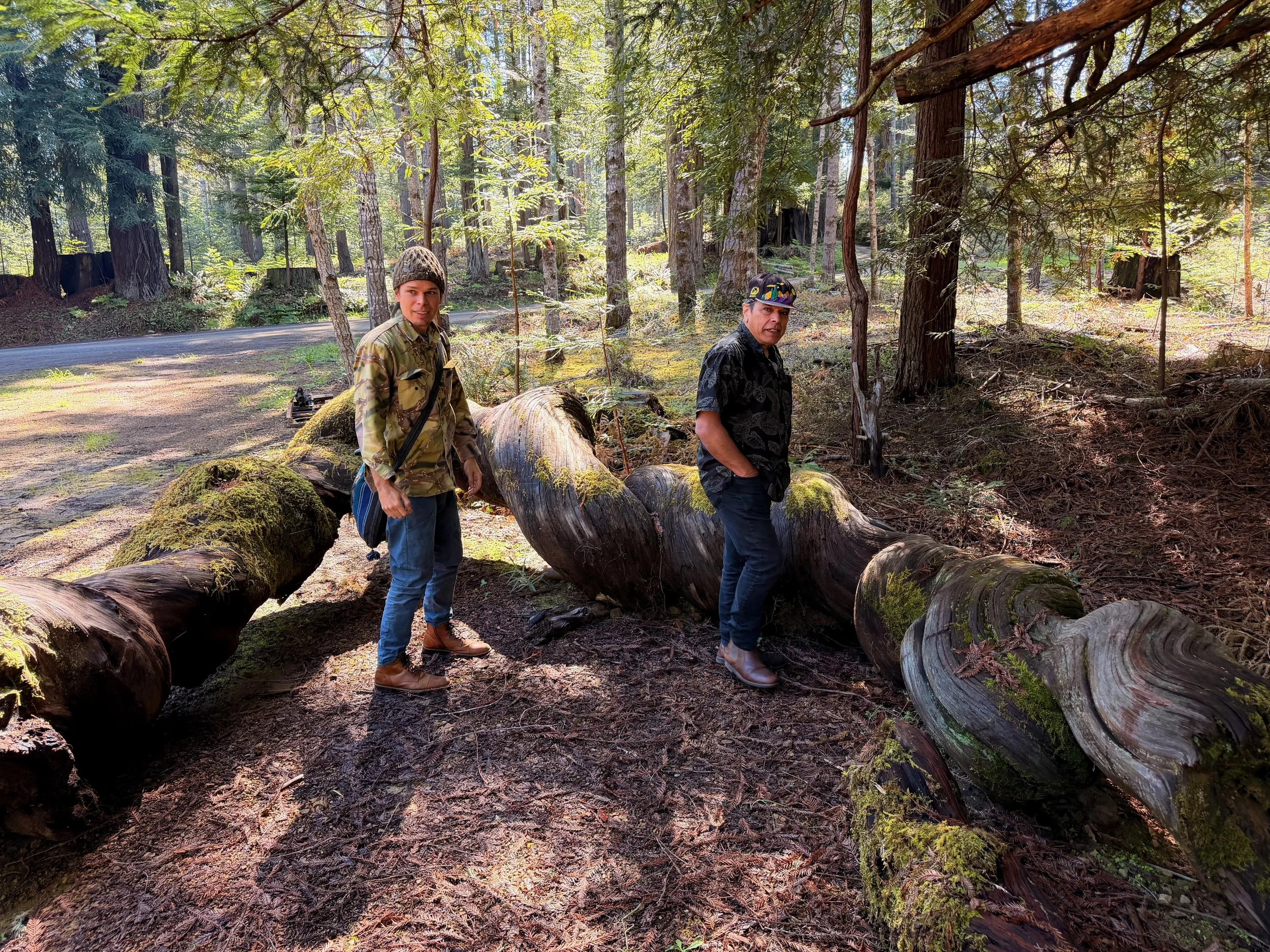
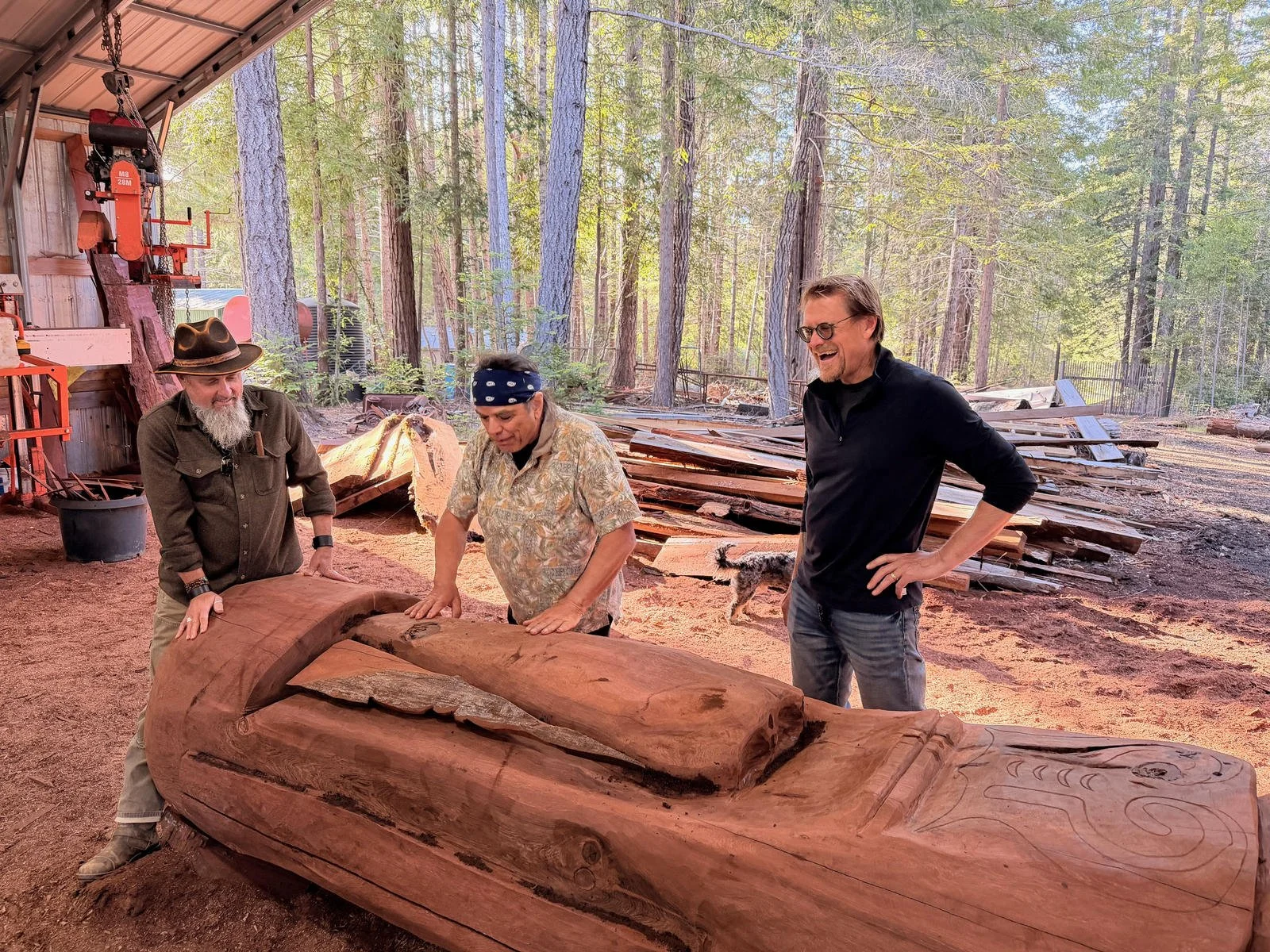
Tonu Shane Eagleton, Christopher Kirkham, Odin the Dog and Koa Stevens inspecting a naturally fallen redwood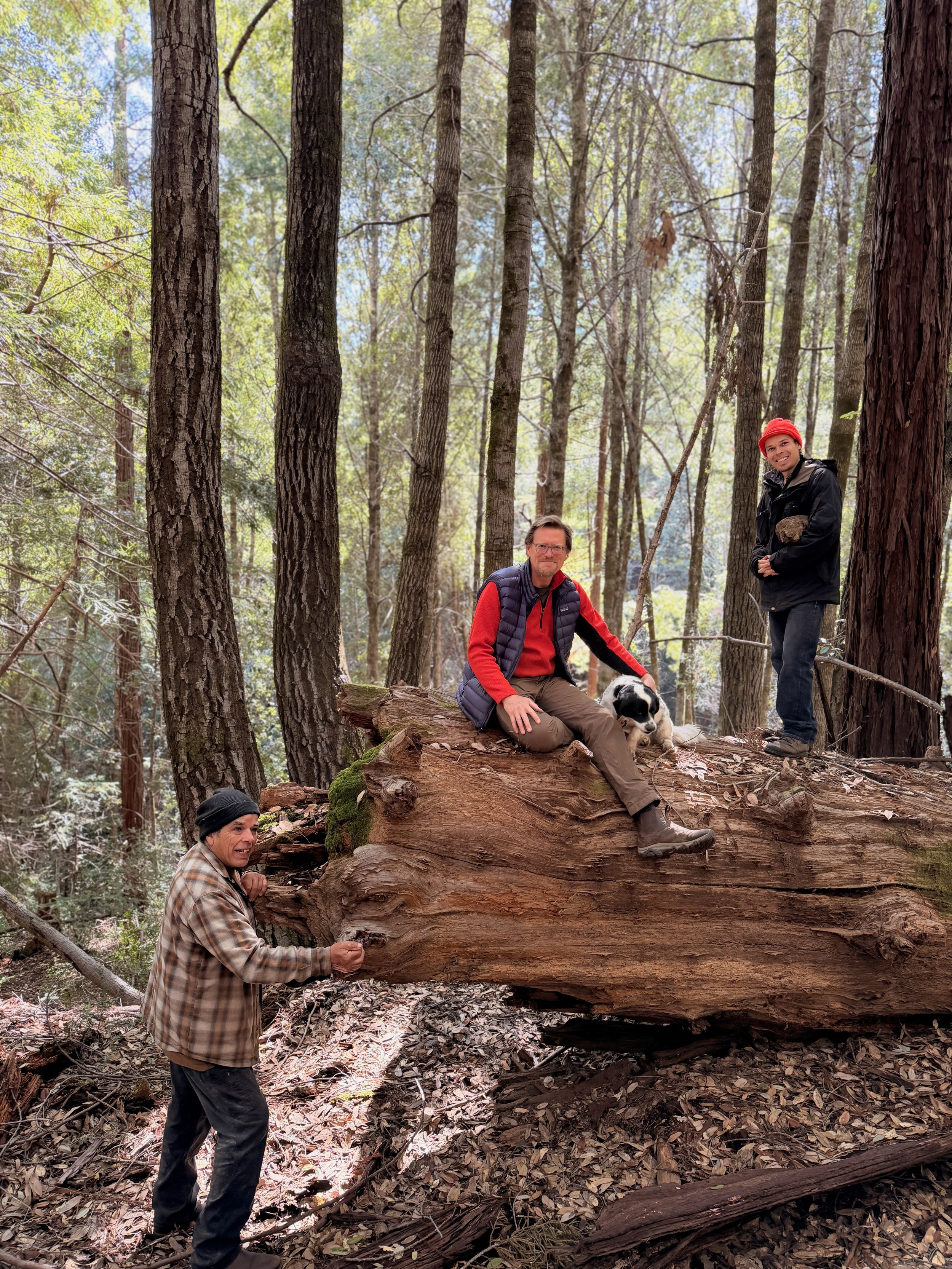
Mana of the Trees
Tonu Shane Eagleton & Koa Stevens
Artists in Residence 2026
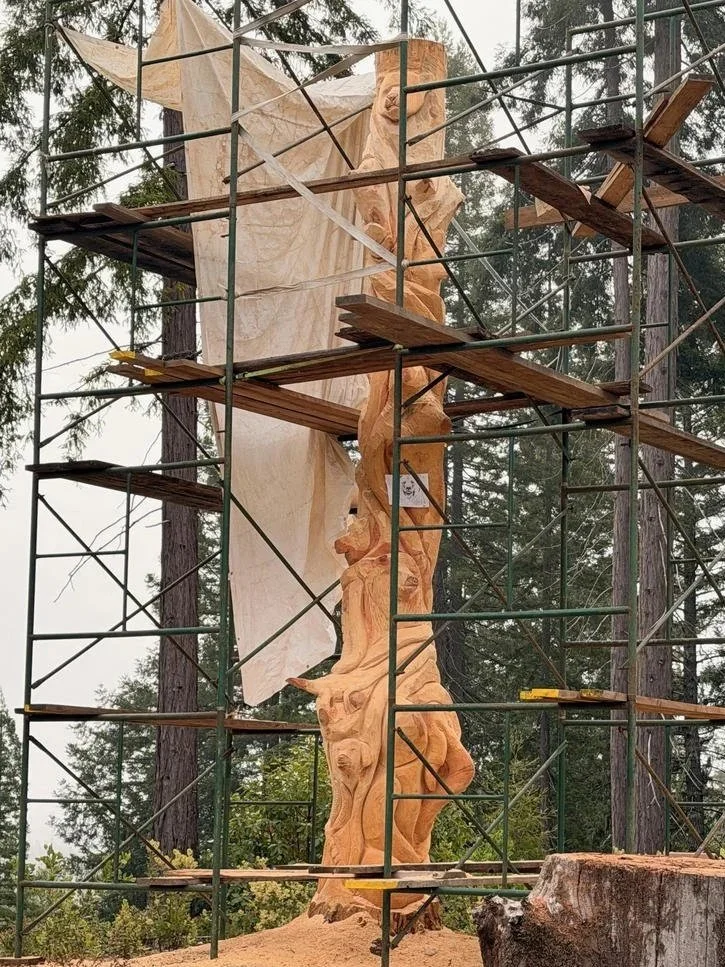
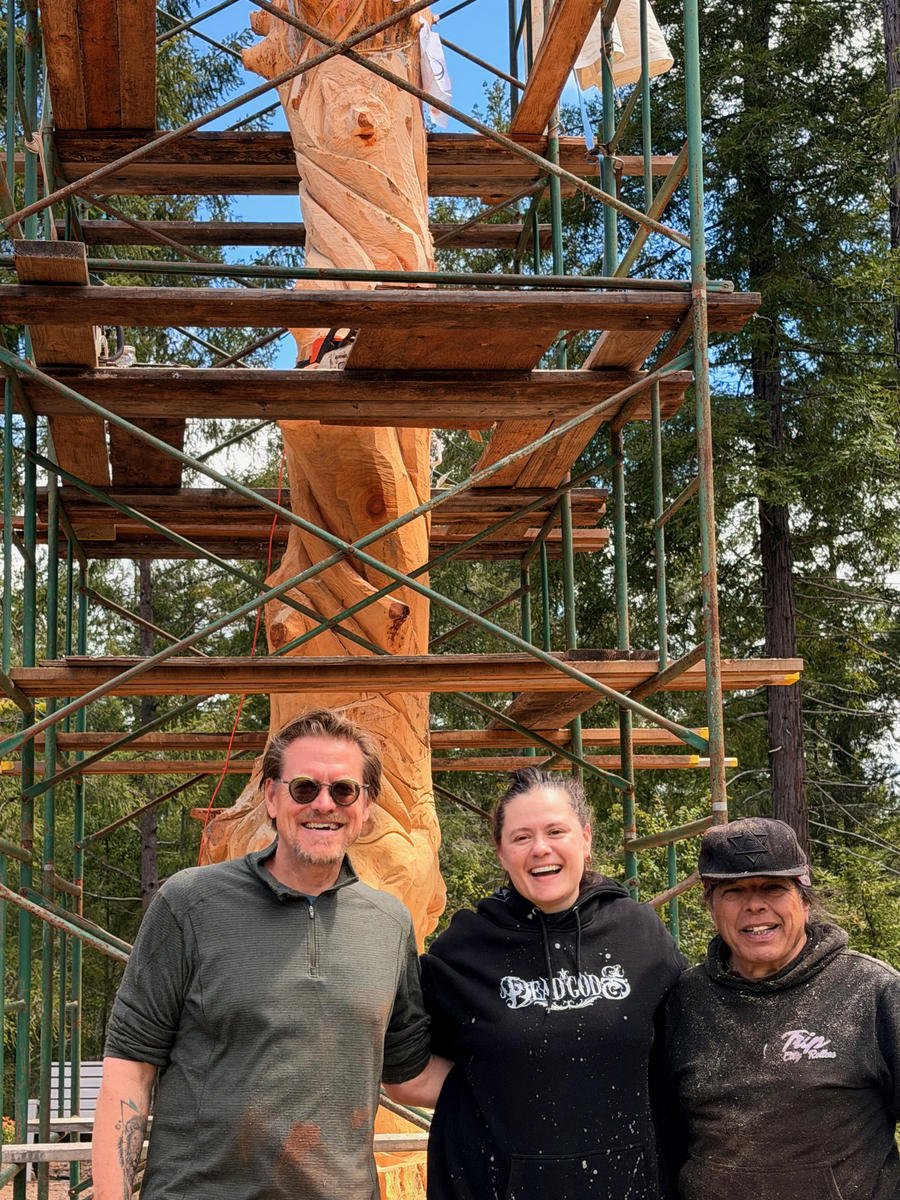
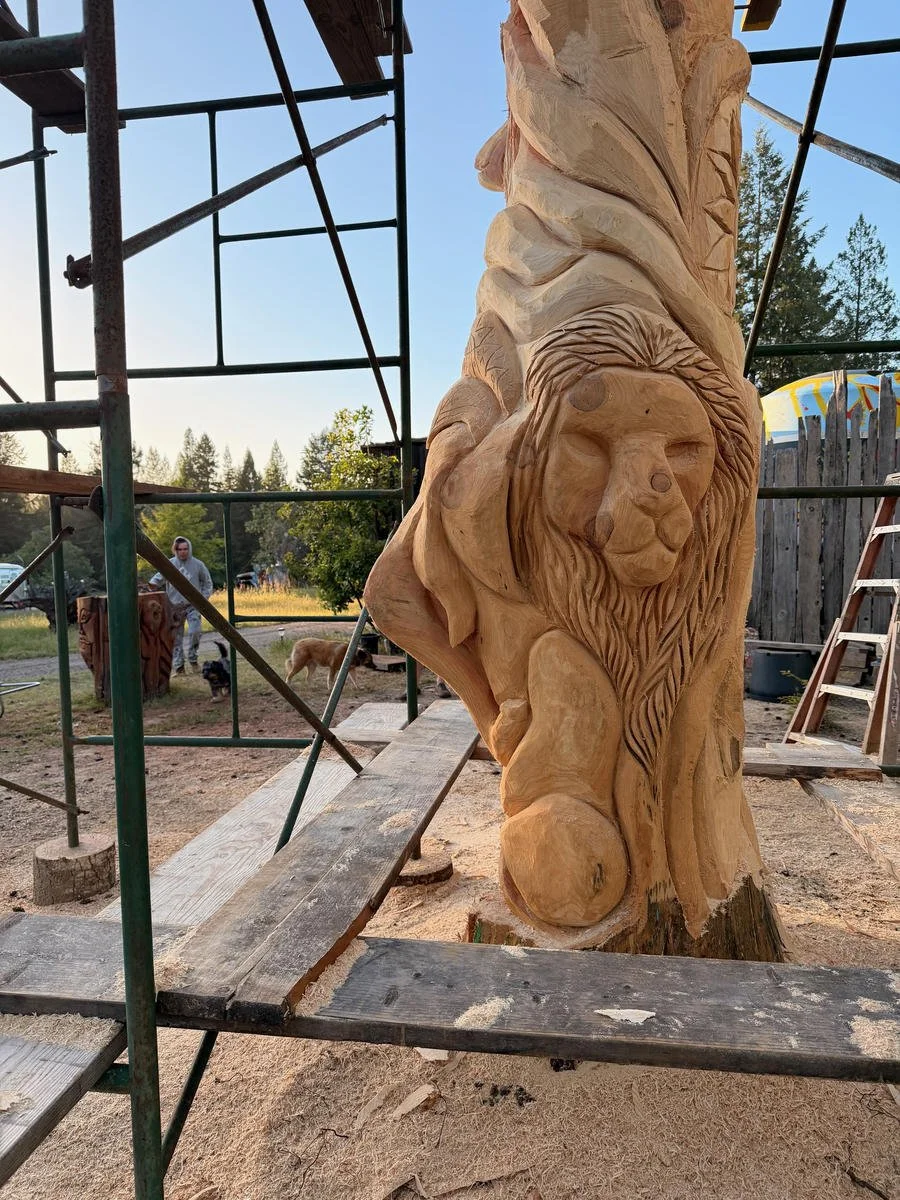
There is a totem pole rising on the property right now. It is eighteen feet of a century-old Douglas fir that has stood on this land longer than any of us — a tree that had begun to die, and that we cut down only partway, leaving it fully rooted. From that same trunk a father and son are now carving. Tonu Shane Eagleton and Koa Stevens are our artists in residence, and the pole, like everything they make, is shaped from wood the world has already set down.
Their lineage runs across the Pacific and through forty years of public sculpture, healing poles, classrooms, festival stages, museum collections, ceremonial gatherings, and an extended residency on the coast of Ecuador. To stand near them while they work is to feel that lineage pressing in. We wanted to share more of it with you.
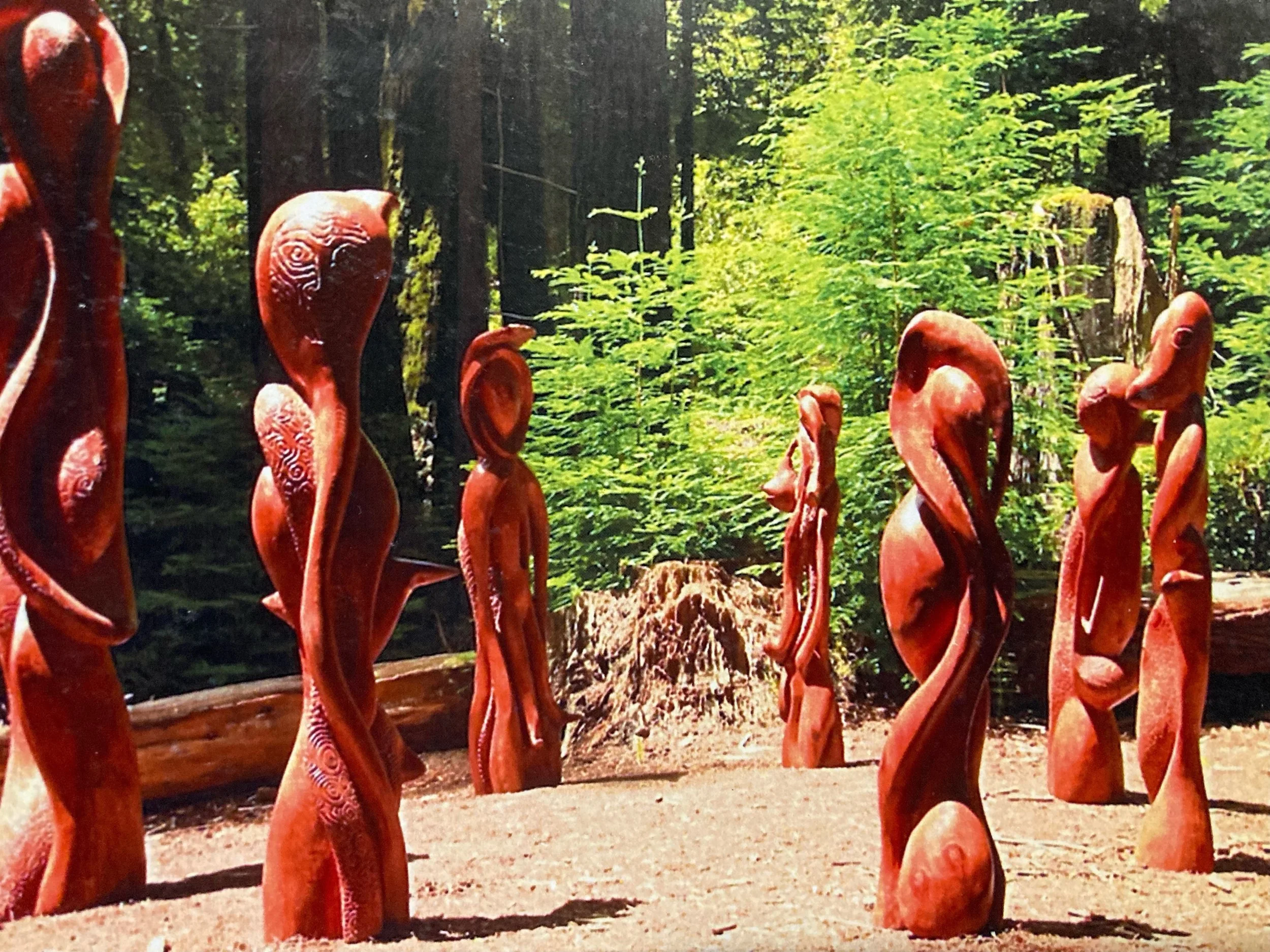
Forty Years, Never a Felled Tree
Tonu Shane Eagleton has carved for more than four decades. The first knife was a penknife given to him at age eight by his Polynesian mother. He whittled sticks with it. He has been carving ever since.
Across the long arc that followed — Aotearoa to Africa to the Czech Republic to the Bay Area to Hawaiʻi to the coast of Ecuador and back — one principle has held: he has never cut down a living tree. Since the early 1980s, every piece he has made has been shaped from wood that has already left the forest. Trees brought down by storm or fire or age. Salvaged timber from sawmill yards and demolished structures. Logs pulled from the silt of San Francisco Bay.
Tropical hardwood stumps left for dead in the Ecuadorian jungle. He calls these materials the Earth's offerings — the wood the world has set down — and treats them with the care due to a gift.
His Rotuman name was given to him by an elder in 2002 (he carved as Shane Eagleton until then). It means one who brings people together. The arc of his life's work has borne it out.
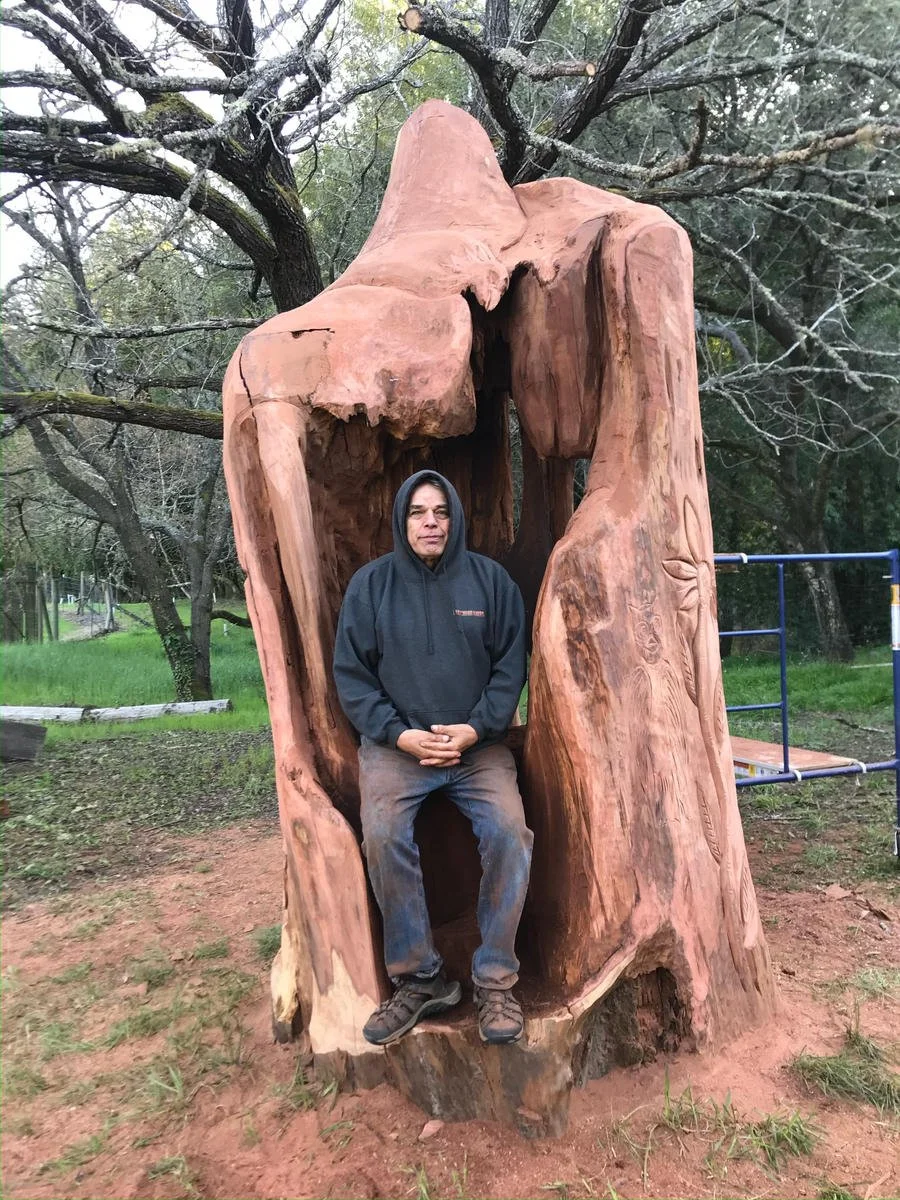
Pacific Roots, a Wandering Apprenticeship
Tonu was born in Auckland, New Zealand, of Polynesian heritage — Rotuman and Tongan — with a British Royal Air Force father who had met his mother in Rotuma during the Second World War. He spent his early years moving across the South Pacific in the 1960s. At seventeen he left, and over the years that followed he traveled and worked through Africa, the Middle East, Europe, and the Czech Republic. He came to the United States the first time crewing a yacht across the Atlantic.
In America he learned tree surgery — a craft that gave him both his cause (recycling trees rather than letting them be discarded) and his unlikely artist's brushes (more than a dozen chainsaws, the largest with a six-foot bar). What followed was a body of work that grew steadily larger and more public over decades. Some three hundred tall poles, stand-alone sculptures, now exist as a result — in Queensland, the Czech Republic, the United Kingdom, Hawaiʻi, across the United States, and beyond. He calls them, with characteristic mischief, acupuncture needles for helping heal the planet.
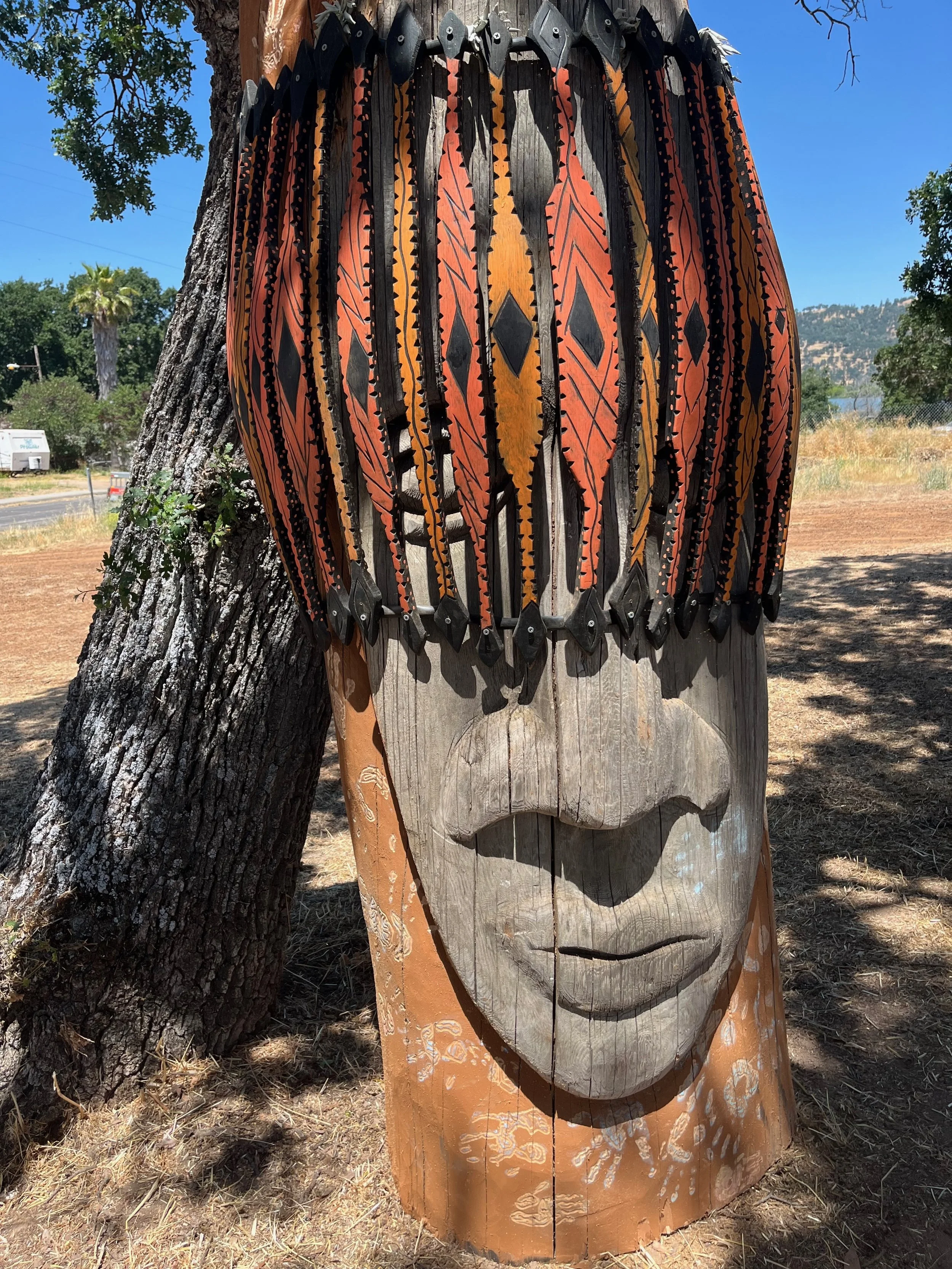
A Long Bay Area Thread
In 1996, Tonu met The Cultural Conservancy at the newly opened Presidio National Park in San Francisco. TCC was the first Native-led nonprofit at the Thoreau Center; he was a sculptor working from salvaged wood at a Presidio carving site. They began a partnership that has now run for nearly thirty years and has produced an extraordinary body of collaborative work.
Through that long thread, his work has settled into the public landscape of the Bay Area: at Golden Gate Park, the San Francisco Zoo, the California Academy of Sciences, the Presidio, the Strybing Arboretum, the Mission Cultural Center, St. Gregory of Nyssa Episcopal Church, and Shoreline Amphitheater in Mountain View, where a thirty-five-foot DNA molecule healing pole stands dedicated to the Indigenous Peoples of America. The 1996 Mother Kohola, exhibited at Crissy Field for the Aloha Festival, was carved from a single five-ton, forty-foot, two-thousand-year-old redwood log salvaged from a defunct sawmill in Mendocino County — the same county where this property sits. Tonu has been carving Mendocino redwood for nearly thirty years before he set foot on this land.
Beyond California, his sculptures live in Australia, the Czech Republic, England, Samoa, and across the Hawaiian Islands. Among them: a thirty-five-foot endangered species pole in Queensland; a healing pole for Western Samoa; sculptures for the Burning Man Festival, the WOMAD Festival, the children's wards of hospitals, and the private collections of musicians and conservationists. In 2001, he became TCC's first artist-in-residence.
The Czech Republic
In the late 1990s, when Koa was about seven years old, Tonu took his son to the Czech Republic. The years after the fall of the Iron Curtain had laid bare an environmental catastrophe:the Black Triangle along the Czech, Polish, and East German borders had become one of the most polluted regions in Europe, with whole stands of spruce killed by airborne sulfur from coal-fired power plants. Tonu carved healing poles from those dead trees — endangered species etched into the bodies of trees that had themselves been ecologically poisoned to death — and taught local people how to salvage the wood for furniture and art, a path toward economic independence in a region still finding its feet after communism. His sculptures from those years were exhibited at Prague University and donated through the Prague Mothers for Peace as ecology sculptures for Czech youth.
The Port Chicago Logs
Of all the wood Tonu has worked with, the most storied came out of a tragedy. On the night of July 17, 1944, two ammunition ships exploded at the U.S. Navy's Port Chicago Naval Magazine, forty miles northeast of San Francisco. Three hundred and twenty men were killed; nearly four hundred more were injured. It remains the worst homeland disaster of the Second World War on U.S. soil. Nearly two-thirds of the dead were Black cargo handlers who had not been given proper training or safety equipment, and the scandal of the disaster — and of the court-martial of the surviving sailors who refused to return to the same conditions — ultimately precipitated the desegregation of the U.S. Navy. The blast itself lit the night sky for two hundred miles.
Floating around the destroyed pier were ten enormous Alaskan yellow cedar logs — caissons that had supported the floating dock since the 1920s. Each was thirty feet long, two to three tons, somewhere between three hundred and over a thousand years old; the oldest, by ring count, was 1,100. They survived the explosion, wrapped in the chains that had tied the dock together. They sank into Suisun Bay, were forgotten for decades, and were eventually dredged from the mudflats — almost sold for firewood before a coalition of Pacific Islander, Indigenous, ecological, and interfaith organizations acquired them in 1997 and trucked them to a special carving site at the Presidio.
That coalition became the Kohola Sculptures Project. Kohola is the Hawaiian word for humpback whale; in the early stages, the team adopted it as a spiritual idiom for seek the light. One log at a time, Tonu and his collaborators carved the salvaged cedars into healing poles, each consecrated for a specific community:
· The One Voice 9/11 Healing Pole — thirty-three feet tall, carved with at-risk youth from Monterey, surfaced with a twisting double helix of endangered species and the outlines of the hands of Monterey police and firefighters in solidarity with their New York counterparts. Dedicated at the Bronx Zoo on September 5, 2002, when Koa was twelve and a collaborator on the work. It greets a million visitors a year.
· The First Peoples Healing Totem gifted to the Mutsun Ohlone of Indian Canyon, near Hollister.
· The Winnemem Wintu Pole at Mount Shasta.
· The Protect All Life Healing Pole set vertically on the Half Moon Bay coast, facing the Pacific— described as an acupuncture needle for the earth.
· The great life-size Whale Pole, the masterpiece of the original project, which would later be transformed by Tonu's son.
Two of the original ten cedars remain. One is destined to return to Cordova, Alaska — the country it was logged from, almost a century ago — to be carved into a healing pole there. JonLarson, who has stewarded the Kohola project since the beginning, documents the full story of the cedars on YouTube. https://youtu.be/vAuvbWwdNbU?si=GljwE13MHtPm3sZv
Stage Sets for a Generation
Through the late 1990s and early 2000s, Tonu also worked extensively with Bill Graham Presents, a collaboration that put his eco-art onto some of the most-traveled rock stages in the country. He built carved backdrops, healing poles, and woodblock rubbings of endangered and extinct animals for the H.O.R.D.E. Festival, the touring music event founded by Blues Traveler's John Popper. Over its run, the festival reached forty-two states and an audience of roughly 1.5 million. The carved animals on those stages — the turtles and tikis and dolphins, the redwood whales — were Tonu's.
A small detail of music history that has stayed with us: it was on a H.O.R.D.E. side stage in Tinley Park, Illinois on August 18, 1995, with John Popper sitting in, that Dave Matthews and Stefan Lessard played what is now believed to be the first known performance of “Crash Into Me” — a song that would become the title track of the band's Crash album the following year and one of the most-loved songs of their catalog. Tonu was there that night. He is in the background of the now-surfaced video of the performance — the carver among his carvings, watching a song that hundreds of millions of people would come to know being sung for the first time in front of his work.
Beyond H.O.R.D.E., Tonu's stage sets and sculptures have appeared with Pink Floyd, the Grateful Dead, Pearl Jam, Dave Matthews Band, and Blues Traveler. From 1997 to 2007 he and his collaborators made the original recycled-wood stage art for the Bioneers Conference at the Marin Civic Center — dozens of carved panels, year over year, honoring endangered species.
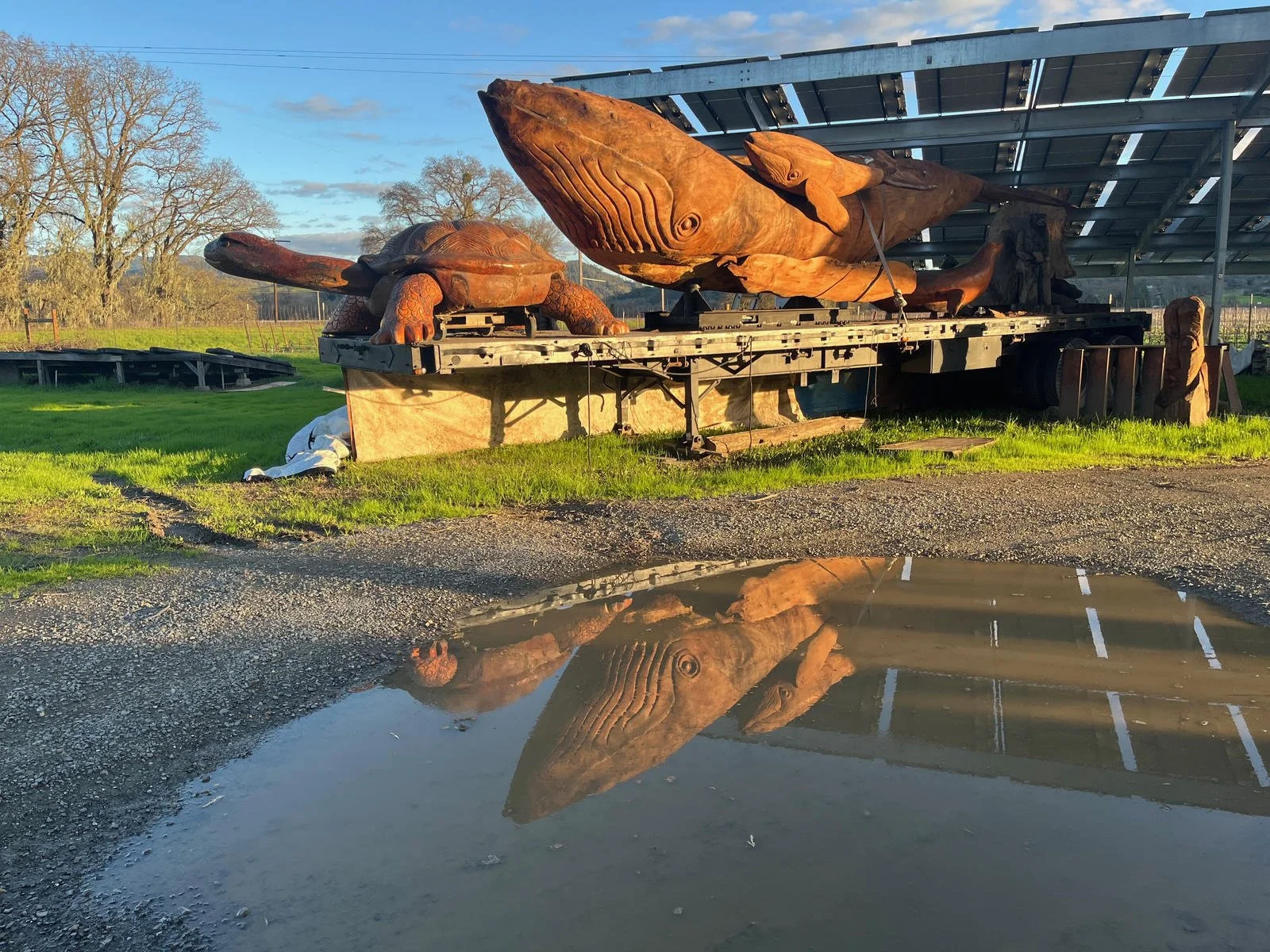
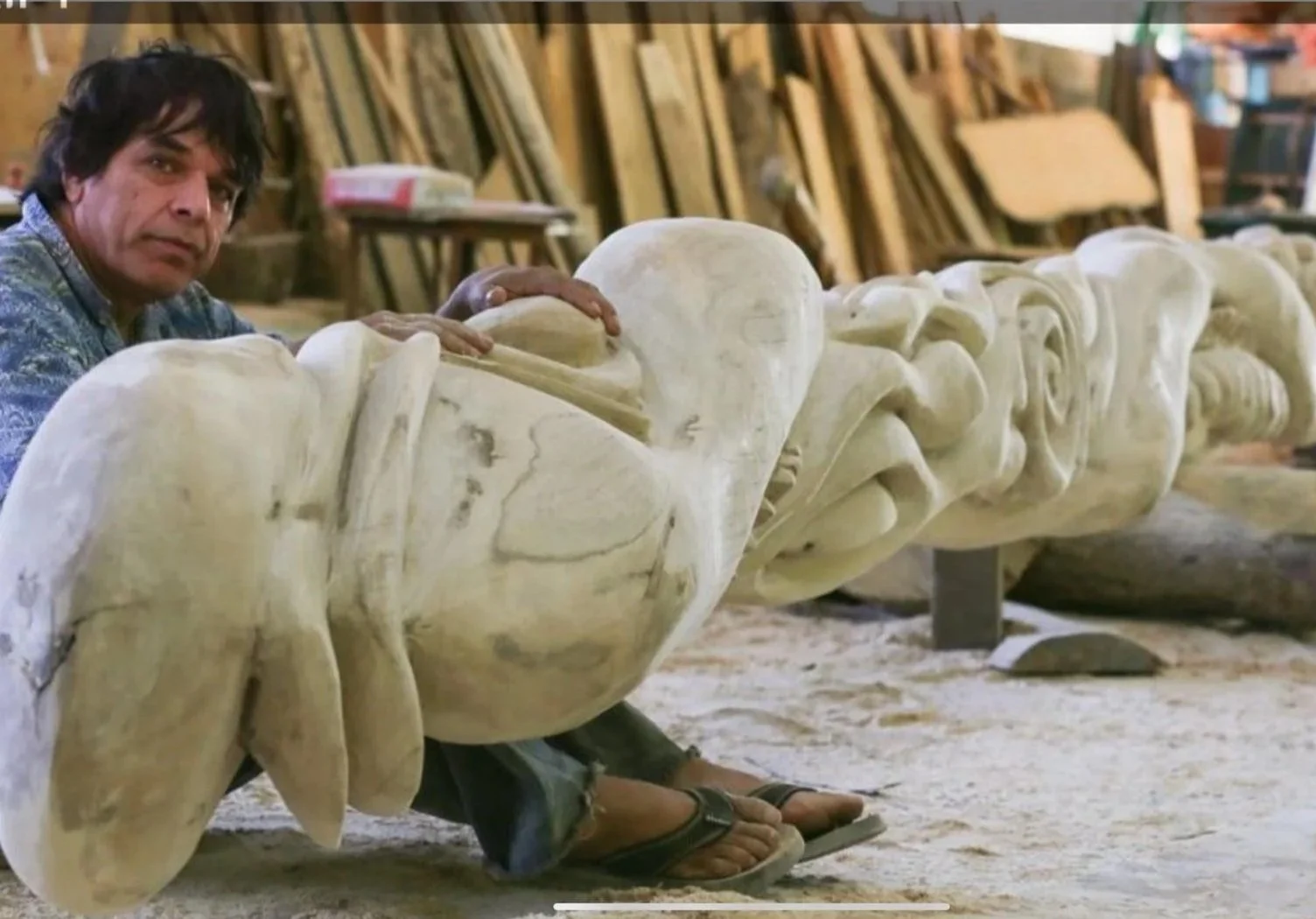
Hawai’i and the Carving School
In 2001, with The Cultural Conservancy's support, Tonu moved to Oʻahu and founded the Na Kukui Hoʻoulu O Naʻauao Program — Cultural Knowledge and Enlightenment Through Trees — at Windward Community College, part of the University of Hawaiʻi. The program was named by the Hawaiian kupuna Auntie Malia Craver. He ran it for six years, teaching dozens of students ofevery age and profession to use carving tools and salvaged wood to make sculpture, furniture, drums, traditional weapons, and storyboards. He worked with master carvers across the Pacific Islands — among them the Tongan Living Treasure Tuione Pulotu, who would become a lifelong mentor. He immersed himself in the heritage his Rotuman name had only just opened to him.
Ayampe, Ecuador
After Hawaiʻi came what Tonu has described as the longest single chapter of his life as a carver: years based on the coast of Ecuador, working with what is widely regarded as the hardest wood on the planet.
They settled in Ayampe, a small village on the Pacific coast of the Manabí province, at the El Campito Art Lodge. The wood was guayacán — a tropical hardwood so dense it dulls steel and sinks in water — along with Saman, Cedro, Cascol, Jazmin, Moral, Kaoba. The stumps were dead and had been left for dead, salvaged sustainably from the coast and jungles of Ecuador.
Tonu and Koa unearthed them, hauled them home, and brought them back as sculpture. Across one stretch of four months, they made sixty pieces.
The work in Ecuador had two arcs running alongside one another. One was Tonu's own — a deepening of his Polynesian iconography on a canvas of stumps that resembled, in their dense red heartwood, nothing he had carved before. He gave the sixty Ayampe pieces names from across Pacific cosmology: Pele the goddess of fire; Tane and Marikoriko, first man and first woman; Tevake, moonlight; Rongo-Mai, the god of whales; Kuku Lau and Kohara, deities of tides and tuna; Ngaru, mountain surf. He also began to use Polynesian-style tattoo carving on the surfaces of the wood — fine, traceable lineage patterns that turn each sculpture into a kind of skin.
The second arc was a community one. Tonu spent the years in Ecuador trying to weave together two ancient lineages of land knowledge — Polynesian elders and Ecuadorian shamans — in shared ceremony. The carving became a way of holding the conversation.
“I am only the guide who teaches how to release the Mana from the wood through carving.”
He has spoken about his practice in plain terms over the years, but rarely as plainly as in the Spanish-language catalog from Ayampe. Translated, his words are these: “I concentrate all my creative energy in shaping powerful symbols that help purify the energy of the place where the works stand. I am only a channel for a powerful mind that transmits all those symbols through me.” And: “My goal is not to be the only one, but to be one of thousands of carvers of sacred symbols in recycled wood, so that these figures become part of contemporary culture — a fusion of ancient and modern, of north and south, of east and west.”
Koa was a young man through these years — carving alongside his father, learning the heartwood. The catalog describes him plainly: co-creating alongside Tonu is his son, Koa — the one responsible for the intricate embellishments that take these creations to the next level. The fine tracery on the surfaces of the Ayampe pieces, the crossing patterns and spirals that make each piece read at once like an animal and a tattoo, are largely Koa's hand.
Father and Son
Koa Stevens grew up inside this practice. He was a child during the Czech Republic chapter, a child during the Kohola Project, a young man through Ecuador. The Indian Canyon Healing Poleis the first work in which the TCC archives note him as a collaborator. He has spent decades learning to carve from his father, and now leads work of his own under the name Salubrious Carver — a name in keeping with his fondness for long, baroque words for ordinary things.
In 2024 and 2025, Koa led the transformation of the great Whale Pole — the masterpiece of the original Kohola Project, made from one of the Port Chicago cedars — into the Talking Story Seat at Heron Shadow, a TCC-stewarded site in Sonoma County on the ancestral lands of the Coast Miwok and Southern Pomo. The Whale was reshaped into three sections, sculpted into oratorial seats, and installed in the Sculpture Garden of Native Science and Learning.
Throughout the process, Koa held carving workshops with the local community — the intent, he has written, was to imbue the wood with the mana of the people who would gather around it.
From the heartwood that was removed in the reshaping, he crafted a storytelling incense — yellow Alaskan cedar blended with Arizona alligator juniper, California cypress, Himalayan cedar, copal, clove, and turmeric — to be released as the seat's stories are spoken.
Together, Tonu and Koa work under the name humanatree, an artistic partnership devoted to environmental, social, and ecological awareness — a continuation, in two generations of hands, of what began with one carver and a few salvaged logs at the Presidio.
“You have got to be worthy of the wisdom of your ancestors, who planted seeds to benefit the unborn future.” - Polynesian elder
This isn't Tonu and Koa's first time carving in Anderson Valley. Eight years ago, just down the road from us at Camp Navarro — the redwood camp in the Mendocino forests — they led a series of corporate retreats for tech companies (GoogleX, Airbnb, LinkedIn, Niantic), teaching engineers and product managers to carve. The wooden sculptures the participants made together are now installed in those companies' offices. There is a short film of the Camp Navarro work that can be viewed here. Watching it now — the redwoods, the chainsaws, the same hands at work — it feels less like a separate chapter than like a quiet first arrival.
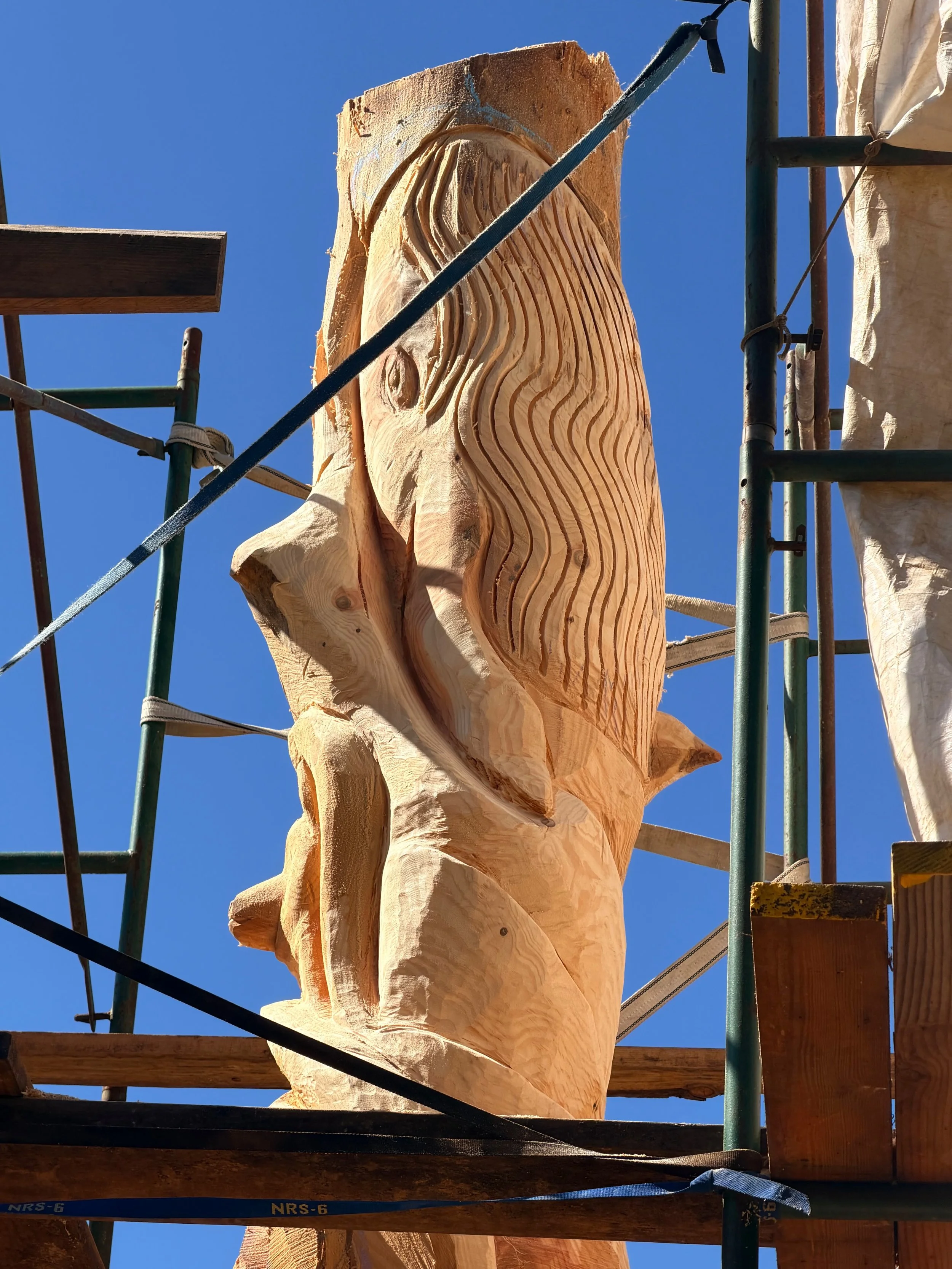
This spring, Tonu and Koa came back to Anderson Valley to begin a new chapter at Space Between Retreat. The totem they are carving is eighteen feet of a hundred-year-old Douglas fir from this property — a tree that had begun to die, and that we cut partway down before leaving it fully rooted in the same earth that grew it. The same wood that fed on this land for a century is now being carved here. The pole will stand exactly where the tree stood. Nothing taken from a living forest; every form drawn out of what the land has already let go.
It is a collaboration we are honored to hold. Tonu and Koa describe their work as restoring mana — the spiritual life force — through trees. It feels like a continuation of everything Space Between Retreat is trying to be: a place where what is salvaged, tended, and listened to becomes more, not less, alive.
And Now, On This Land
What’s Still Ahead
The pole at Space Between is one part of a much larger arc. Tonu and Koa are now working toward a season of work that will take their carving across the world to Samoa - an ancient redwood healing pole to be carved in consultation with indigenous leaders in Samoa. The intention, in Tonu's framing, is something like a slow circumnavigation of healing.
See also where the Cultural Conservancy maintains a history of their collaboration https://www.nativeland.org/mana-of-the-trees; Koa has written about the Talking Story Seat at Heron Shadow. https://www.salubriouscarver.art/talking-story-seat-with-heron-shadow/
MUSIC
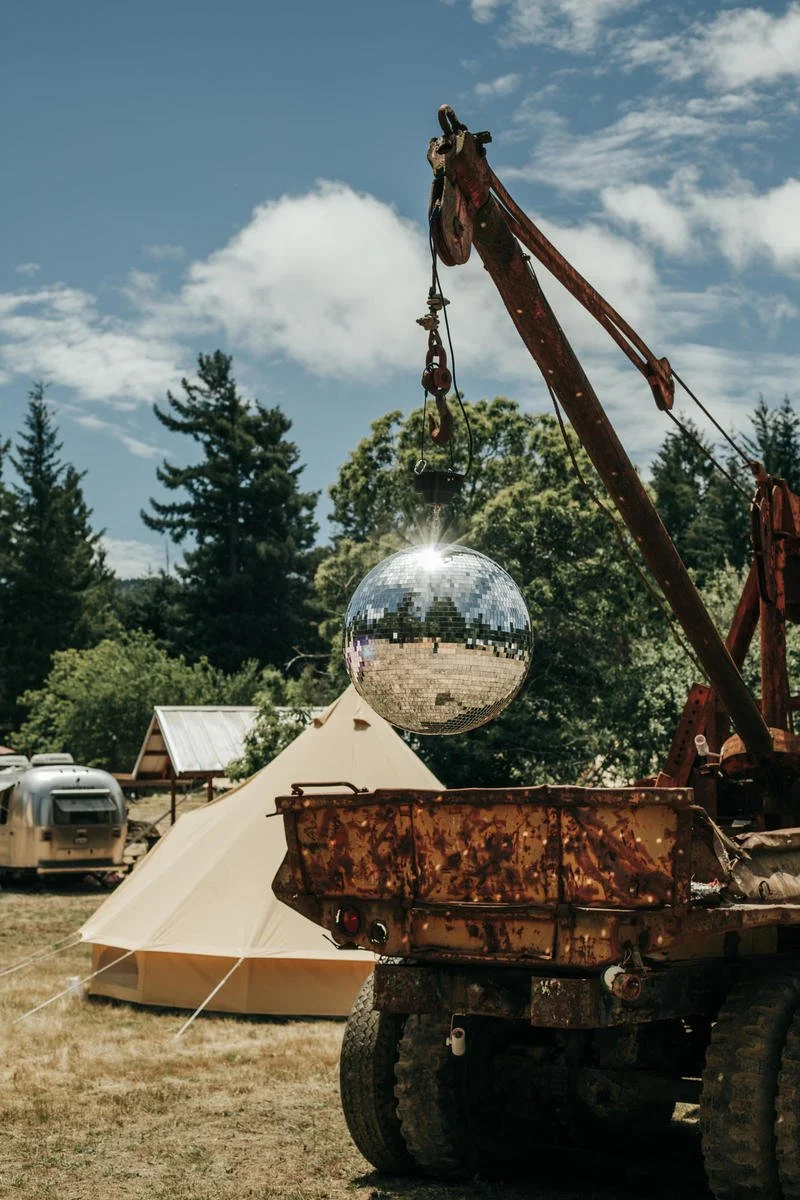
Music is the backbone of the experience at Space Between Retreat. It begins with the natural music of the forest- birds, wind, flowing creeks, bees, and dog barking. Then our friends show up with their guitars, singing voices, loopers and keyboard skills. Samantha creates a soundtrack to the experience using her playlists on Soundcloud and Spotify- meditation, yoga, journey music, pool chillout, dinner accompaniment, morning beginnings and full-out dance parties. Newly added to the Beer Garden is the Phoenix Stage, emerging from the site of the original residence on the Barn Side. Sound baths happen on the yoga deck, in the movement studio, at the Mother Tree and around the pool.
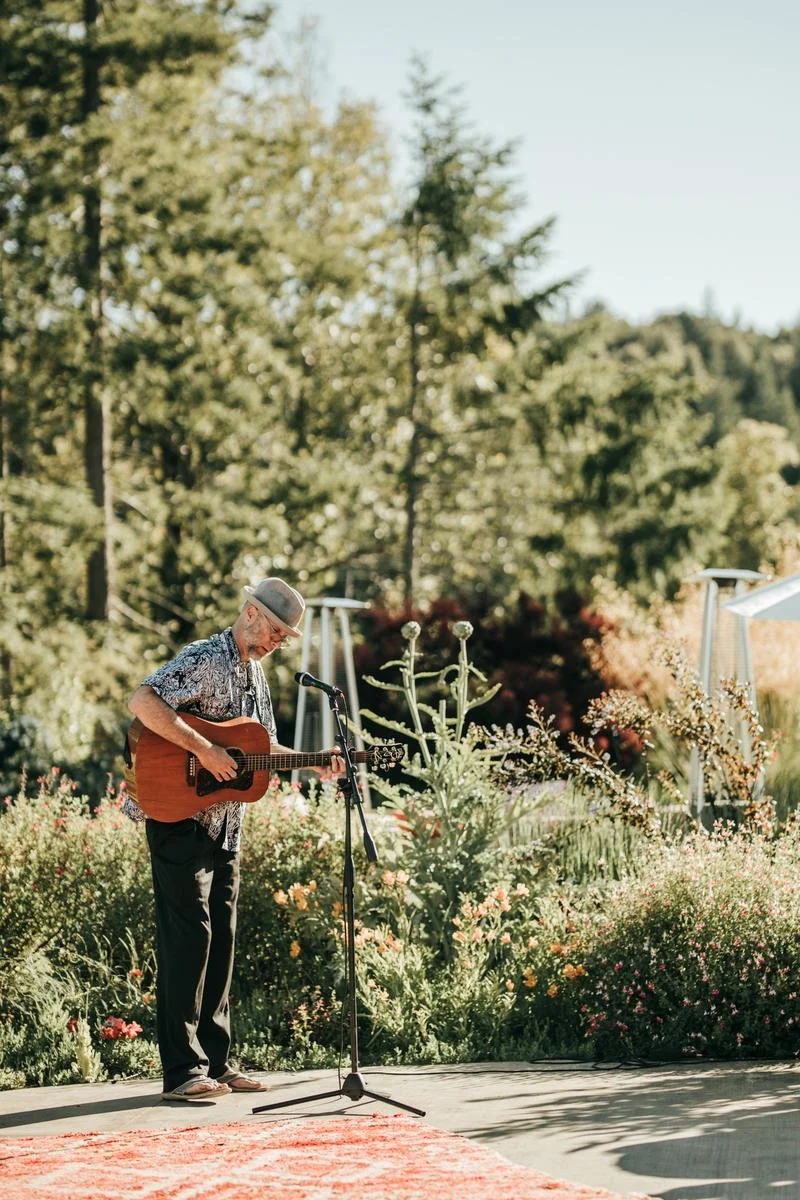
Celebrating Music (Featured: Josh Eden https://finestkindmusic.com/joshua-eden)
Listen Up
Explore some of our curated playlists. Follow Samantha Good on Spotify or Space Between Retreat on Soundcloud for more.